There’s something quietly satisfying about stepping onto a freshly built tennis court. Maybe it’s the crispness of the lines, the smell of the surface after a light rain, or just the feeling of space opening up before you. For some, it’s a personal sanctuary. For others, it’s a small hub of competition, laughter, and practice. But building or maintaining a tennis court is more than just pouring concrete and painting lines—it’s a careful blend of planning, measurement, and understanding how the game interacts with the space.
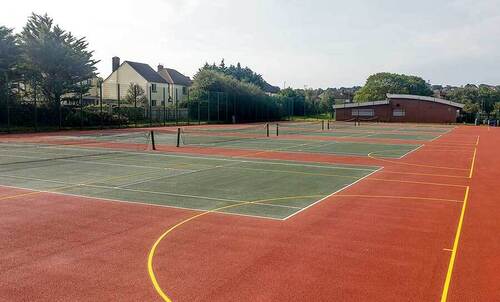
When most people imagine a tennis court, they picture the standard rectangle with crisp white lines. But there’s a lot of nuance behind those dimensions. The official tennis court size matters, not just for regulation play, but for the overall feel of the game. A court that’s even slightly off can affect rallies, angles, and player comfort. For singles play, the court is narrower, allowing for a more strategic game focused on placement. Doubles requires the full width, which can drastically change how players move, cover space, and strategize. Even small differences in length or width can make a huge difference for serious players or clubs trying to meet official standards.
Beyond just size, the surface itself plays a big role in how a court feels. Hard courts, clay, and grass all have very distinct personalities. Hard surfaces are durable and predictable, which is why they’re so common in public facilities. Clay courts slow the ball and create a longer, more tactical game. Grass, well… it’s slippery, fast, and a little temperamental, but there’s a charm to the unpredictability. Synthetic surfaces try to balance the best of all worlds, but each comes with its own installation quirks and maintenance requirements. Choosing the right surface isn’t just about aesthetics—it’s about comfort, playability, and longevity.
A well-constructed tennis court starts with a solid foundation. You can’t skip steps here. Proper grading, soil compaction, and drainage are essential. Without them, puddles, cracks, and uneven bounces become inevitable. Some people underestimate how much a seemingly minor slope can matter. Even a fraction of an inch per foot can make the difference between a playable court and a nightmare during rainy months. Fencing, windbreaks, and lighting might seem like afterthoughts, but they actually define the usability of a court. You want your space to be welcoming, not frustrating.
And then there’s the human side of things—how people interact with the space. A court isn’t just a rectangle; it’s a place for memories. Kids learning their first volleys, friends gathering for weekend games, tournaments that start as casual fun but end with friendly bragging rights. The best courts aren’t just functional; they invite people to step in and stay. Every scratch, every faded line tells a story of hours spent in motion, laughter echoing, and practice grinding away. Ensuring the tennis court is built to last preserves those experiences.
Let’s talk a bit more about size. You might think, “A court is a court, right?” But there are subtleties. Regulation singles courts are 27 feet wide and 78 feet long. Doubles adds another 9 feet in width. That’s not just trivia—it changes how players move and how shots behave. Even backyard courts often try to replicate these dimensions because the rhythm of the game relies on it. If the court is too narrow or short, it can feel cramped and unnatural; too wide, and the ball might fly into zones that feel off for casual play. Understanding tennis court size is crucial for anyone looking to build, renovate, or even just buy equipment suited to their space.
Materials again play a big role here. Concrete or asphalt may seem like easy choices, but they come with trade-offs. Acrylic coatings add a bit of cushion and protect the surface from cracks. Modular tiles are easy to repair and allow flexibility in design. For someone who wants to experiment with both competitive play and casual practice, choosing a surface that balances durability and comfort is key. And remember: maintenance isn’t optional. Regular cleaning, minor crack repairs, and recoating will extend the life of your court significantly. Think of it like gardening—the more care you put in, the better it grows.
Cost is another consideration. Building a full-sized, regulation-compliant court is not cheap. There’s a temptation to cut corners on materials or professional installation, but those shortcuts often cost more in the long run. Poor drainage, uneven surfaces, or a subpar foundation can lead to constant repair bills. Spending a little more upfront on high-quality construction or proper tennis court size planning can save money and frustration later.
Orientation matters too. Sun, wind, and local weather patterns can drastically influence how enjoyable a court is. A court facing east-west might be blinding in late afternoon sun, while north-south orientation tends to be more forgiving. Some builders even scout their site for weeks, observing how sunlight moves across the property, before committing. These small but thoughtful details often distinguish a great court from a mediocre one.
At the end of the day, building or upgrading a tennis court isn’t just a technical challenge—it’s a personal investment. Every decision, from dimensions to surface to orientation, affects the way people experience the game. And it’s not just about professional or competitive play. Backyard courts can host family rallies, weekend workouts, or neighborhood tournaments. The memories made on these courts are as important as the materials used to build them.
 pulsemarket
Leave a comment