Some cities demand your attention. Tbilisi doesn’t. It waits. It lets you arrive half-tired from a flight, a little unsure, maybe scrolling through your phone for reassurance. And then, quietly, it starts working on you. A curved street here. A warm loaf of bread there. A balcony leaning out like it’s curious about your life. Before you realize it, the noise in your head softens.
Georgia’s capital isn’t the kind of place you “do” in a checklist kind of way. You wander it. You mispronounce street names. You sit longer than planned. Tbilisi has layers — ancient, Soviet, modern, artistic — but they’re not neatly separated. They overlap, sometimes awkwardly, sometimes beautifully. And that messiness is the charm.
For many travelers, especially first-timers to the country, choosing a tbilisi georgia tour package feels like a sensible starting point. Not because Tbilisi is confusing, but because it’s deceptively deep. There’s history here that goes back over a thousand years, and nightlife that feels almost rebellious in contrast. Having someone quietly handle logistics in the background lets you focus on what matters — soaking it in without rushing through it.
Walk through the Old Town and you’ll feel it immediately. Narrow streets snake uphill, past sulfur bathhouses that still steam like they have for centuries. Churches sit calmly beside homes with chipped paint and hanging laundry. It doesn’t feel curated. It feels lived in. And that’s rare these days.
Food plays a big role in how Tbilisi introduces itself to you. Georgian cuisine isn’t loud with spice, but it’s generous with comfort. Khachapuri — bread filled with molten cheese, butter, and sometimes egg — arrives unapologetically heavy. Khinkali dumplings require patience and a bit of technique. Eat them wrong and you’ll wear the broth. Eat them right and you’ll understand why meals here stretch on longer than expected.
Wine, too, is everywhere. Georgia is one of the oldest wine-producing regions in the world, and it shows. This isn’t wine as a luxury product. It’s wine as a conversation starter, a tradition, a daily companion. You’ll drink it in cozy bars, family homes, and cellars that feel more like living rooms than tasting rooms.
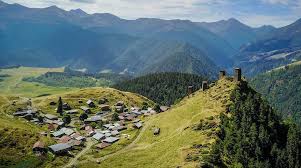
Once you leave the capital, Georgia opens up quickly. Within a few hours, the scenery changes completely. Rolling hills turn into dramatic mountains. Vineyards give way to snow-dusted peaks. Places like Kazbegi feel almost unreal, especially if you’re used to city skylines and traffic noise. The air is sharper. The silence feels intentional.
Travelers flying out of India’s west coast often find Georgia to be an easy transition — culturally different, but not intimidating. That’s why interest in a georgia tour package from mumbai has grown steadily over the past few years. The journey isn’t exhausting, the visa process is straightforward, and the destination offers a blend of nature, history, and downtime that feels well-balanced. It’s not just sightseeing. It’s reset time.
One thing that surprises many Indian travelers is how approachable Georgia feels. English isn’t universal, but it’s spoken enough. And when words fail, gestures and patience usually fill the gap. People are direct, sometimes blunt, but rarely cold. If you look lost, someone might walk with you instead of pointing. That kind of kindness sticks.
Of course, Georgia isn’t polished in a postcard-perfect way. Roads can be rough outside major cities. Plans don’t always run on time. Shops might open when they feel like it. But those imperfections add texture. Georgia doesn’t smooth itself out for tourists. It invites you to adapt, to slow down, to accept that not everything needs to be efficient to be meaningful.
Tbilisi, especially, teaches this lesson well. You might set out to see three places and end up spending the afternoon in one café, watching people pass by. You might plan a short walk and stumble into a small church, a local market, a hidden bar. The city rewards curiosity more than schedules.
As your trip nears its end, something subtle happens. You stop trying to capture everything. The photos slow down. The urge to “do more” fades. Instead, you start paying attention to smaller things — the sound of footsteps on old stone, the way light hits a balcony at sunset, the clink of glasses during a toast you don’t fully understand but somehow feel.
Georgia doesn’t try to impress you with perfection. It offers something quieter, more lasting. A sense that travel doesn’t always have to be intense to be transformative.
And long after you’re home, back in the rush of daily life, you’ll catch yourself thinking about Tbilisi. Not a single monument or landmark — but a feeling. Calm. Curious. Unrushed.
That’s how you know it worked.
 pulsemarket
Leave a comment